
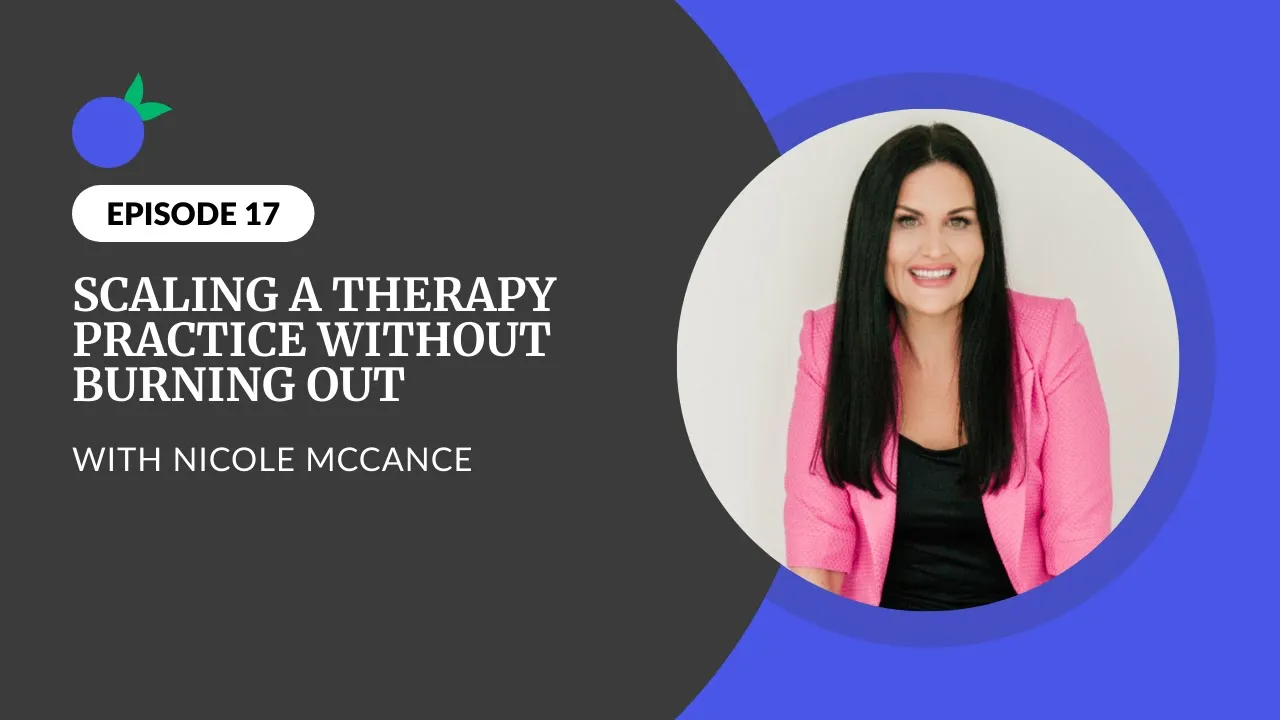
Nicole McCance spent 15 years as a psychologist before building a group practice of 55 therapists, scaling to multiple seven figures, and selling it - all while raising toddler twins. We sat down with her on the Berries podcast, and what stayed with us wasn't the numbers. It was the moment she described pulling into her driveway in tears, looking up at two small faces in the window, knowing she was missing bedtime again. That moment - not a business strategy - is what changed everything.
Lesson 1: The Breaking Point Is Usually the Beginning
A lot of therapists don't decide to grow a group practice from ambition, they decide from exhaustion.
Nicole's turning point was personal. After 15 years of solo clinical work, she hit the ceiling that every independent clinician eventually finds: the only way to earn more was to see more clients. There was no leverage, no scale - just hours traded for income, one session at a time. When she became pregnant with twins, the math simply stopped working.
What her story makes clear is that building a group practice often isn't a business decision - it's a sustainability decision. The catalyst is the moment the current structure stops being livable.
Lesson 2: Systems First, Hiring Second
One of the most counterintuitive things Nicole shared: don't hire before you systemize.
The instinct, especially for therapists wired around relationships, is to bring people on and build as you go. Nicole calls what happens next becoming the "Chief Question Answerer" - the person everyone comes to because there's no manual, no onboarding, no documented process for anything.
What she recommends instead is building infrastructure first: clear workflows, documented processes, and answers to the questions a new hire will inevitably ask. That structure is what makes delegation actually work, and what turns a hire from an added burden into a genuine extension of the practice.
Lesson 3: Your First Hire Should Look Like You
When Nicole started building her team, she began with what she calls a "mini me" - a clinician with a similar energy, modality, and relational style to her own.
The reasoning is straightforward: when a solo clinician builds a wait list, clients show up because of that specific clinician. Referring them internally to someone with a very different style often means losing them. Nicole learned this firsthand when she handed 30 clients to a colleague who was, by her own description, the opposite of her in personality and energy. Almost none of them stayed.
The lesson is less about personality matching and more about continuity of care - clients who choose a solo practice have made a trust decision about that clinician. The first expansion of the team should honor that trust - not disrupt it.
Lesson 4: A Leaky Website Costs More Than Bad Marketing
Nicole's framework for attracting clients rests on a simple premise: don't run ads to a website that doesn't convert.
She described a pattern she sees regularly - therapists investing in Google Ads, getting traffic, and wondering why it doesn't become bookings. The problem usually isn't the ad. It's that the website leads with anxiety rather than aspiration. Empty couches, rainy-window imagery, faces that communicate the feeling clients are trying to move away from.
Her advice: show the life clients are working toward, not the one they're escaping. This sounds like branding advice, but it's really clinical communication. The therapeutic relationship begins before the first session - in the moment someone decides whether they trust you enough to reach out.
Lesson 5: Following Up Isn't Solicitation - It's Access to Care
Many therapists feel uncomfortable reaching out to someone who didn't book after a consult call, or who went quiet after an initial inquiry. It can feel pushy - not in keeping with how clinicians think about their role.
Nicole names that discomfort and challenges it directly. Someone who submitted a contact form or showed up to a consult has already asked for help. Following up isn't pursuing a sale. It's reducing the friction between someone who needs care and the care itself.
Sometimes, she notes, the follow-up reveals that a client wasn't the right fit for one clinician on the team - but was exactly right for another. Without it, that person either gets nothing or waits on someone else's list. For practice owners building teams, this reframe matters: a well-run follow-up process isn't a sales tactic, but a care delivery system.
Lesson 6: The Administrative Hire Nobody Makes Early Enough
According to Nicole, the therapists who grow fastest in her program share one habit: they hire administrative support earlier than feels financially comfortable.
An admin at five hours a week can feel like an expense before it feels like a return, but what it actually buys is clinical bandwidth - the capacity to stay focused on client work instead of fielding rescheduling calls and managing intake emails between sessions.
A 2023 survey of 750 behavioral health professionals by the National Council for Mental Wellbeing found that 68% of those providing direct care said administrative tasks take time away from clients. That burden is real, and it compounds quietly over time. This is something we hear from clinicians using Berries regularly: when the administrative layer lightens - whether through staff support, AI-assisted documentation, or both - clinicians show up differently in the room.
Lesson 7: Building for the Long Run
Nicole didn't plan to sell her clinic. The opportunity came because she had built something that didn't require her daily presence to function. That's the distinction that matters - not just for anyone thinking about selling, but for anyone who wants a sustainable career.
A practice with documented systems and a capable team can survive a leave of absence, a period of lower clinical capacity, or simply a real vacation. Building operationally is a form of professional self-protection, not exit planning.
The shift Nicole describes - from clinician to CEO - is genuinely hard for most therapists. The clinical identity is personal; it's the reason most people entered the field. Stepping back from direct service can feel like moving away from what matters.
Her experience suggests the opposite: therapists who make this shift don't do less meaningful work. They create the conditions for more of it to happen, for more people, with less cost to themselves.
A Final Thought
The most useful part of Nicole's story isn't the scale, it's the reason.
She wanted to be home for bedtime; She wanted to stop being the only person the practice depended on; She wanted to build something that gave her team more security than solo practice ever could.
For therapists still figuring this out: you don't need to want 55 therapists. You just need to want something more sustainable than what you have right now.
Listen to the full conversation with Nicole McCance on the Berries Podcast:
Connect with Nicole McCance:
Professional Disclaimer: This article is for informational purposes only and is not a substitute for professional clinical judgment, supervision, or continuing education. Therapists should consult current clinical guidelines and use their professional discretion when applying this information to individual client cases.